How I Use DeFi for Auto Profit-Taking MooDeng!!!
Hello there! Let’s take a break from Node and focus on another area of my interest. This article will tell my story about how I use DeFi…
Hello there! Let’s take a break from Node and focus on another area of my interest. This article will tell my story about how I use DeFi protocols to manage meme tokens.
What I use DeFi for?
I typically use DeFi for long-term yield, like staking to get 5–15% APY, often tied to airdrops like Mitosis. In a sideways market, providing liquidity is my go-to for earning fees with minimal impermanent loss. However, with the current bullish sentiment, I haven’t provided liquidity for a few months.
But how is this related to meme coins?
Well, meme coins are something I really don’t like. But their 100x stories are really cool. Most of my bag are in Alt coins with interesting use cases, such as DePIN, AI, SocialFi, etc. Meme coins, on the other hand, have no real use case (for me).
My mindset for trading meme coins is similar to gambling. When I go to a casino, I don’t expect to win. My approach is to stay for 3–4 hours with, let’s say $200 USD, enjoying the slot machines, Russian roulette, or Baccarat. If I win, it’s a great day. If I lose it all, I can still go home happy and sleep well. This is the same mindset I apply to meme trading. In fact, I don’t go to casinos often — meme trading as well.
For me, trading meme coins has a very low success rate.
- 80% of them go to zero.
- 15% of them do well, gaining 2x–10x returns, but my greed tells me to hold, and they finally go to zero.
- 4% of them increase by 2x–3x, then drop by 50% and stay there for more than six months. I can’t decide what to do with them.
- For the last 1%, I sold at 1–2x, and then it went to 10x — hahaha.
So, how do these two paths — DeFi and meme coins — cross together? Since meme coins have such a short lifespan, staking or providing liquidity doesn’t quite fit into the picture.
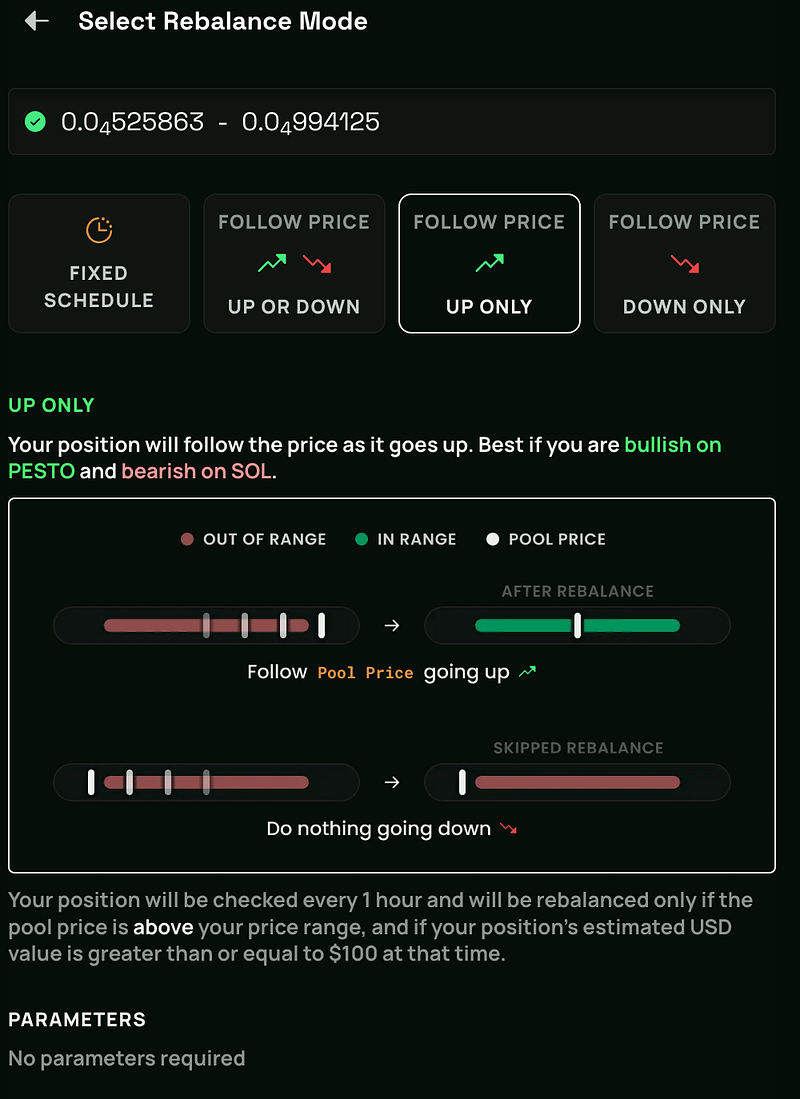
Recently, I found HawkFi.ag, which can do “Up Only Auto-Rebalancing” (I’ll explain the auto-rebalancing later). If I use this together with meme coin, it can help me to automatically take profits. Looking back at the 20% of my meme investments above (bullet 2nd, 3rd, and 4th), the real issue is not the memes themselves since they performed well. Rather, I didn’t take profit.
Actually, “Down Only Auto-Rebalancing” can be used in DCA use cases, but we will cover the the “Up Only” in the article.
Classic LP vs DLLM (or CLMM)
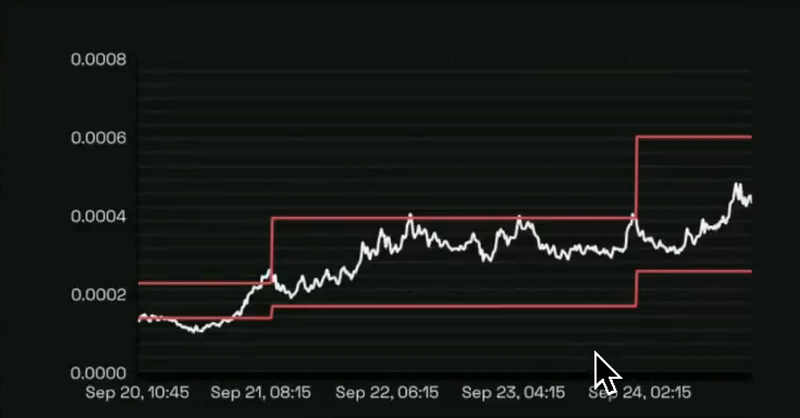
Before we go deep into the setup, let us understand the difference between classic LP and DLMM (or CLMM). In my experience, classic LP tends to generate lower earnings, and here’s why. With classic LP, your liquidity is spread out evenly across the entire price range, even in areas where there’s little to no trading. This means a lot of your capital is just sitting there, not really working for you.
Another thing I’ve noticed is that classic LP is less efficient. Since your liquidity is everywhere, you’re missing out on concentrating it where the real action is happening — where the trades are. This is where advanced models like DLMM (Dynamic Liquidity Market Making) shine. DLMM adjusts your position dynamically, ensuring that your liquidity is placed where it can actually earn higher fees.
However, there’s a downside to be aware of. While DLMM can boost earnings by concentrating liquidity, it also means your position might be pushed out of range if the price moves too far. When that happens, your liquidity won’t generate any fees until it moves back into range or you rebalance manually. So while it can give you better returns, you need to keep an eye on it to avoid missing out during big price swings.
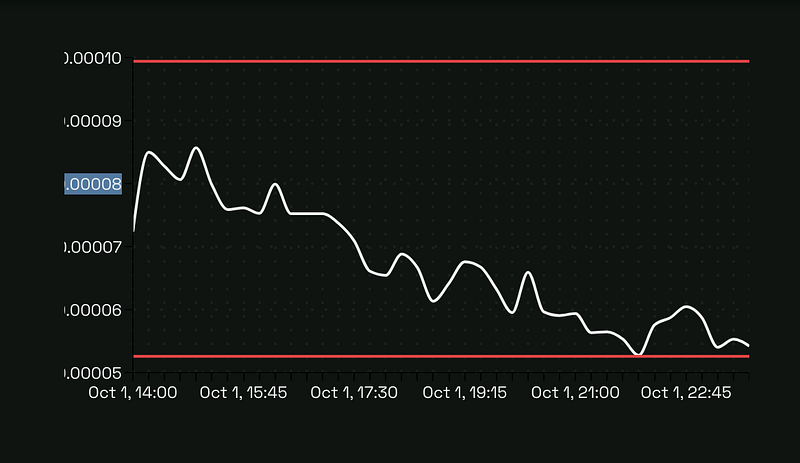
That’s where auto-rebalancing comes into the picture. It has been invented to address out-of-range issues by rebalancing your price range to fit with your strategy. This defi protocol will have a bot to check your price range every hour. If your price is not in the range (below or above), it will rebalance your position to fit with your new price range.
Let me illustrate with a simple example. Suppose the current price of MOODENG is $50, and you set your price range between $40 and $60. If the price increases to $61 or above, your position would typically stop earning fees because it’s out of range. However, with auto-rebalancing, the bot detects that the price has moved beyond your specified range and automatically adjusts your position to a new price range, say $50 to $70. This way, you continue to earn fees.
How this help in MEME Coin profit taking?
When the price of your meme coin increases beyond your initial price range (e.g., from $50 to $61), the auto-rebalancing bot adjusts your position by selling a portion of your meme coins at this higher price. The profits from this sale are then moved into a harder asset, such as SOL, effectively securing your gains in a more stable investment. The bot then sets a new price range (e.g., $50–$70) to continue capturing potential gains from the meme coin’s upward movement.
Why auto-rebalancing in lower range are bad in this case?
If the bot rebalances when the price drops below your range, it would buy more meme coins at the lower price using your stable asset. While buying low is a common strategy, with meme coins there’s a significant risk that the price may continue to decline or never recover, increasing your potential losses.
How to use HawkFi.ag auto-rebalancing?
Up to this point, I believe you understand the concept. If you’re ready to get started, let’s watch this How-To video.
Although there is auto-rebalancing, I still recommend you closely monitor your meme coins, at least a few times a day. The issue isn’t with the DeFi CLMM configuration; the issue is the meme coin itself. Remember my meme performance? 80% of them went to zero, and their price movements are incredibly fast.
My PESTO-SOL Performance
After the setup, let’s see how everything works. Unfortunately, this showcase doesn’t demonstrate auto profit-taking yet since the price is currently going down. However, I’ll provide an update later when the situation changes.
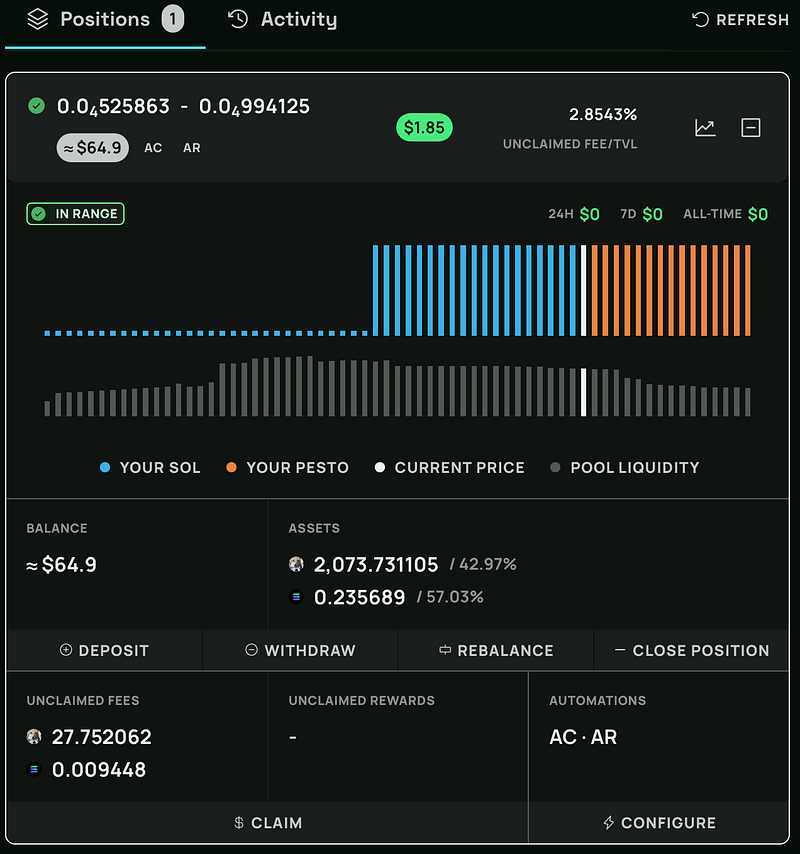
After 20 minutes, the price moved up — feeling good! Also, I earned an extra $1.85 in fees apart from the price appreciation.
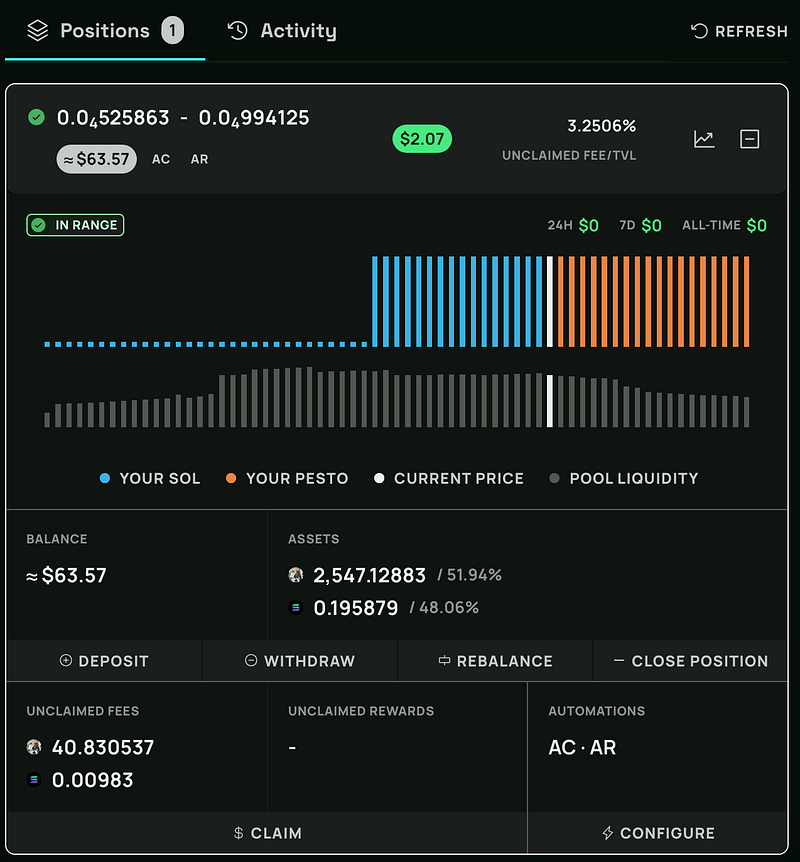
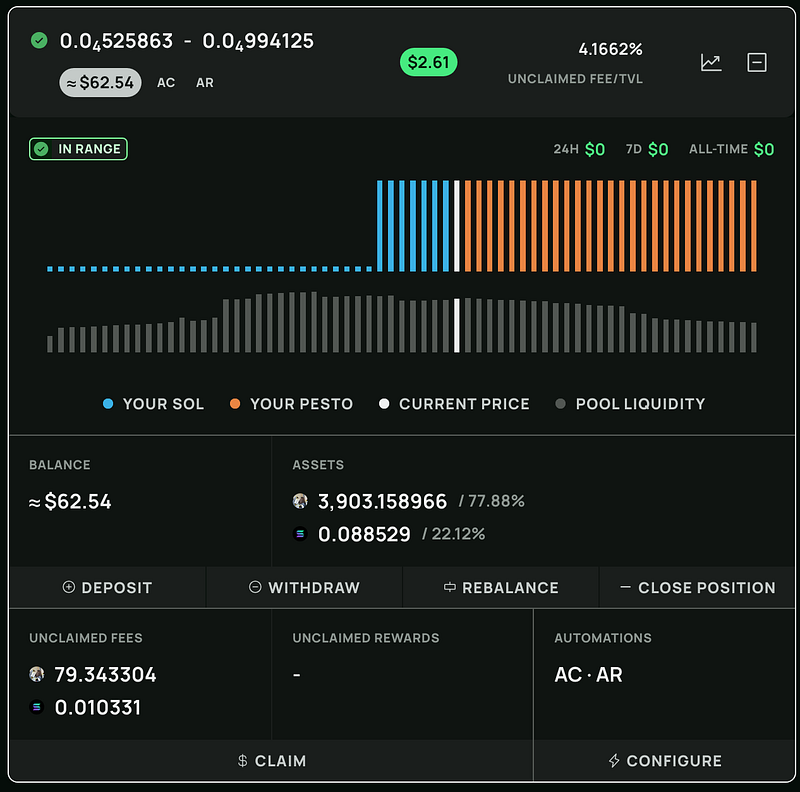
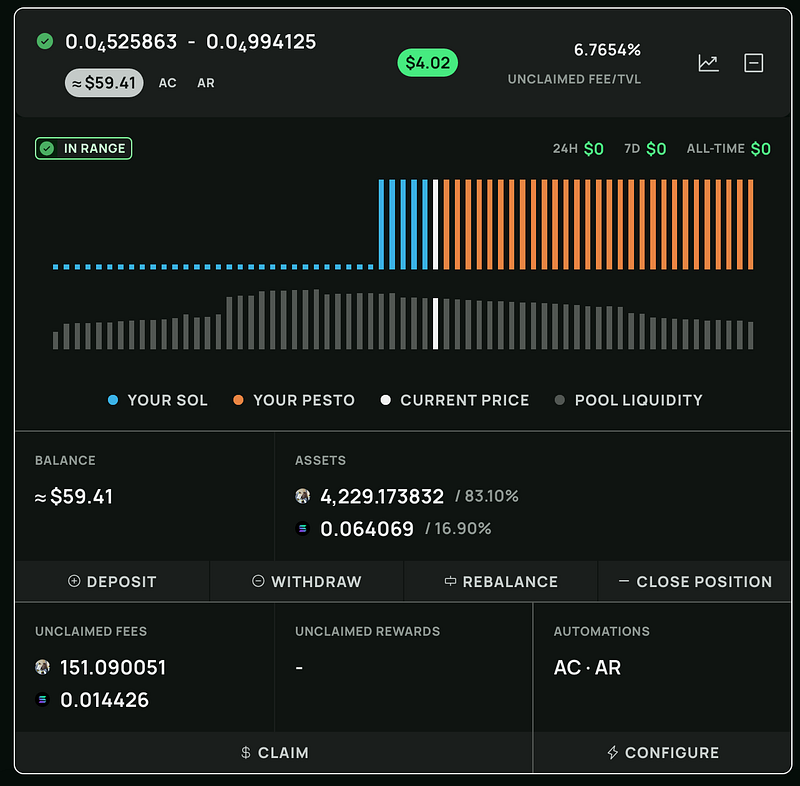
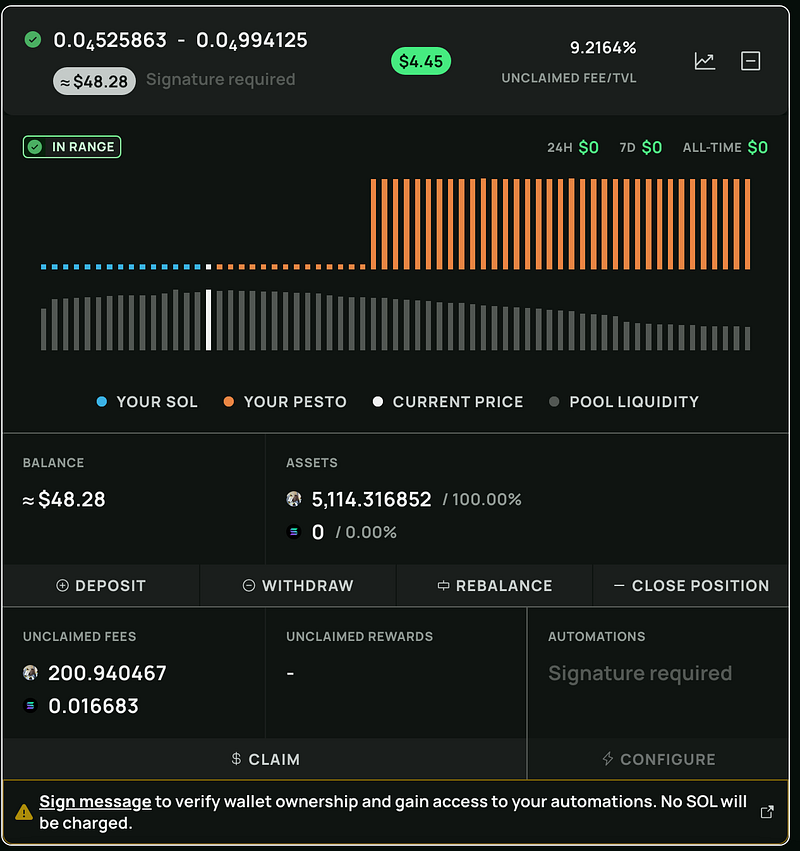
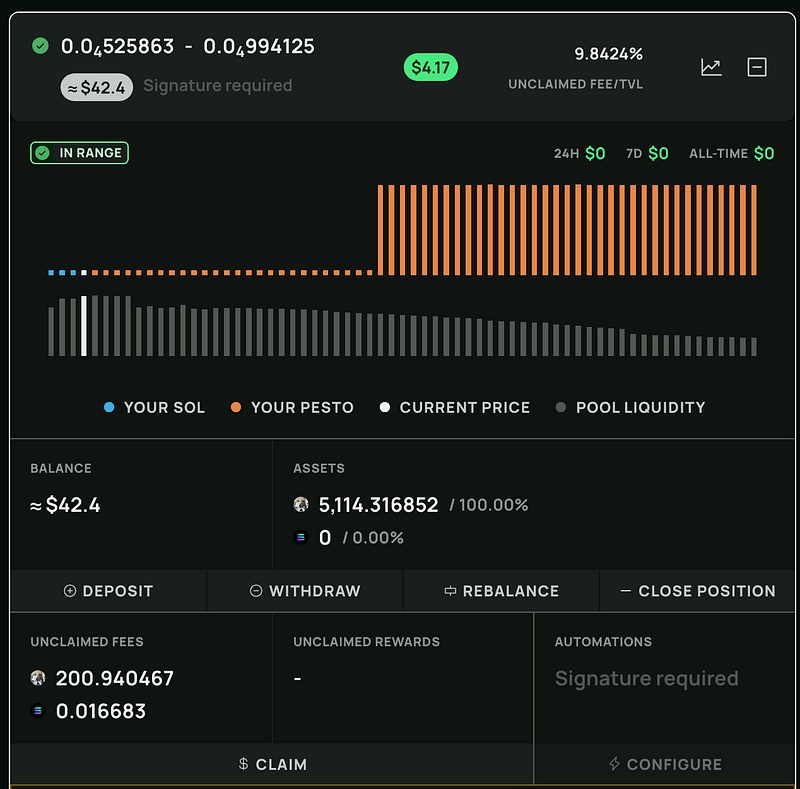
Notice that the fee is decreasing very slightly. Actually, the fee itself isn’t reduced, but the unclaimed fees are in both MEME and SOL. So, if the majority of your fees are in MEME coins, their dollar value can drop when the MEME price goes down. If your MEME coin rugs, you’ll still get the tokens, but they’ll be worthless.
That’s all for today. This DeFi protocol actually has many other cool features, such as auto stop-loss, profit-taking, and auto fee compounding. I’ll try to explore more use cases and share them with you soon. Thank you for reading!